
Functional Radiotherapy Program
Dupuytren’s Contracture Shouldn’t Steal Your Grip.
You have tools to hold, hands to shake, and daily tasks that depend on your grip. Low-Dose X-Rays may help slow early Dupuytren’s progression before hand function becomes more limited.
No Surgery
Completely non-invasive
No injections
No needles into the joint
No downtime
Return to routine activities
Early Intervention
May help slow progression
What Is Dupuytren’s Contracture?
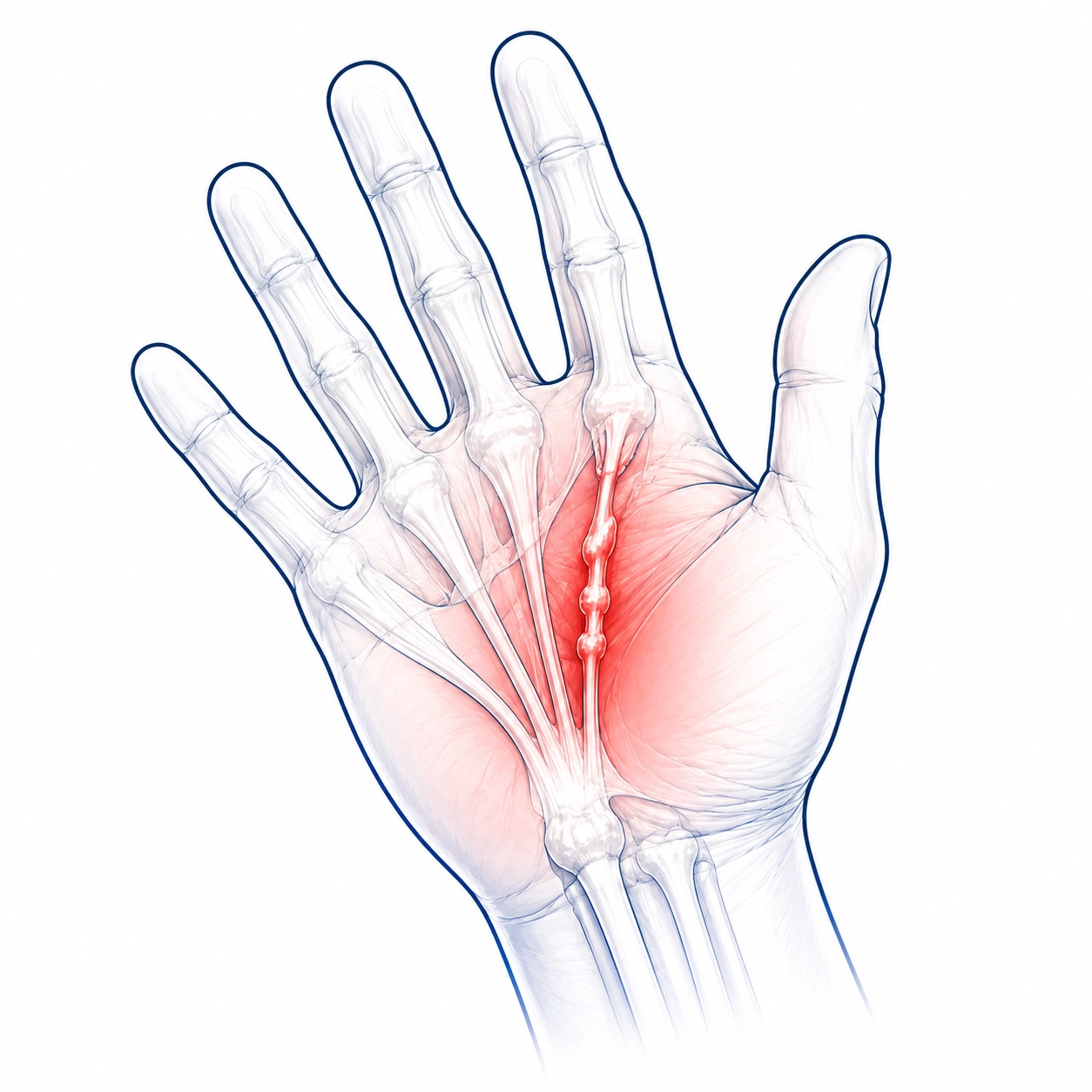
Dupuytren’s contracture is a progressive hand condition that causes thickened tissue to form in the palm. Over time, this tissue can create firm nodules or cords that pull one or more fingers inward.
For many people, Dupuytren’s starts with a small lump or tight band in the palm. As it progresses, it can become harder to fully straighten the fingers, place the hand flat on a table, grip objects, use tools, put on gloves, or perform normal daily tasks.
Dupuytren’s is not just a cosmetic hand problem. It can slowly interfere with independence, work, hobbies, and the simple hand function patients rely on every day.
Common Symptoms
Lumps or thickening in the palm, tight cords under the skin, fingers pulling inward, reduced ability to flatten the hand, and trouble gripping or handling objects.
Common Problem Areas
The palm and fingers, most commonly involving the ring and small fingers, although other fingers may also be affected.
Current Treatments Compared With Low-Dose X-Rays
Many Dupuytren’s treatments are used after the disease has already caused finger contracture. Low-Dose X-Rays are different because they may be considered earlier, when nodules or cords are active but before severe loss of motion develops.
Observation
Some patients are told to watch and wait until the hand worsens. Observation may be reasonable in mild cases, but it does not actively address progression when nodules or cords are developing.
Injections or Procedures
Needle procedures, enzyme injections, and surgery may help selected patients, but they are usually considered after contracture has developed. They may involve recovery, repeat treatment, or procedural risks.
Low-Dose X-Rays
Low-Dose X-Rays use very small amounts of targeted radiation to calm the overactive tissue process associated with early Dupuytren’s disease. Treatments are brief, non-invasive, painless, and require no anesthesia or recovery time.
A Different Approach to Hand Function
Low-Dose X-Rays are designed to fit earlier in the treatment pathway, before the hand becomes severely contracted. For patients with active nodules, cords, tightness, or early progression, this treatment may offer a non-surgical option aimed at preserving function.
The goal is not simply to wait for the hand to worsen. The goal is to help slow the abnormal tissue activity so patients may maintain better hand mobility, grip, and daily function.
Potential Benefits
No surgery or incisions
No anesthesia
No downtime after treatment
No needles
Designed to help reduce inflammation
May help preserve hand function
Move Better. Live Better.
Patients with early or progressive Dupuytren’s contracture may be candidates for Low-Dose X-Rays, especially before severe finger contracture develops. A consultation can help determine whether this treatment is appropriate for your specific condition.